Office relocation or refurbishment: how to decide whether to stay or move

Deciding whether to refurbish your office or relocate is a business decision before it is a property decision. Workplace consultancy helps establish what your team needs, how the existing office performs and whether its limitations can be resolved through change.
A new address will not automatically fix an unclear working model. Equally, a well-managed refurbishment cannot overcome every building constraint. The aim is to compare credible options against the same brief.
Start with the outcomes you need, then assess the spaces and delivery routes capable of achieving them.
When does office refurbishment make sense?
Refurbishment is worth investigating when the current location works and the building has the capacity to support your next stage.
The problem may be an outdated layout, too many large meeting rooms, poor acoustic separation or a mismatch between desks and other work settings. These issues may be addressed without moving the entire business.
However, retain the distinction between an office that looks tired and a building that limits what can be achieved. Services capacity, floorplate geometry, access and the ability to separate noisy and quiet activities all need consideration.
The stay option should describe a realistic design intervention. “Refresh the office” is not a comparable alternative to a properly developed relocation proposal.
When should you consider relocating?
Relocation deserves closer attention when the current office cannot support essential requirements within a sensible investment and programme.
You may need a different location for staff and clients, more contiguous space, a building with suitable infrastructure or an occupation arrangement that accommodates a changing business.
Test whether these are genuine constraints or assumptions. An office that feels full may have inefficient storage and poorly used rooms. Conversely, a layout that appears to fit on paper may not support the required capacity of ventilation, welfare facilities or circulation.
Before reviewing potential buildings, agree the criteria that would make a move worthwhile. This helps avoid being distracted by a visually impressive office that does not solve the operational problem.
Compare staying and moving against the same workplace brief
Use a common evaluation framework for all options.
| Decision area | Refurbishment assessment | Relocation assessment |
| People and activities | Can the current office support the required work settings? | Does the new space offer a better fit? |
| Building capability | What must be adapted or replaced? | What does the landlord actually provide? |
| Business continuity | Can work be phased or teams temporarily relocated? | How will systems and staff transfer? |
| Cost | What is the complete cost of staying and changing? | What is the complete cost of securing, fitting out and moving? |
| Flexibility | Can the office respond to future scenarios? | Do the property and fit-out support those scenarios? |
| Timing | Can the work align with operations and lease events? | Can access, fit-out and occupation be coordinated? |
Weight the criteria before scoring the options. A business that depends on client proximity may reach a different conclusion from one prioritising access for a dispersed team.
Record the evidence behind each score. This makes the decision easier to explain and reduces the influence of individual preferences.
Compare total costs over a consistent period
A construction quote alone is not enough to compare staying with moving.
For refurbishment, consider design and construction, furniture, technology, temporary accommodation where needed, phased moves and business disruption. Include ongoing occupation costs over the agreed assessment period.
For relocation, assess the new property commitments alongside fit-out, professional appointments, removals, technology migration and any overlap between premises. Review existing lease obligations with the appropriate property advisers.
Use the same time horizon and assumptions for both options. A lower initial project cost may not represent the better overall outcome if it leaves an expensive operational problem unresolved.
Keep cash expenditure, potential incentives and uncertain allowances visible rather than combining them into an unexplained net figure. Decision-makers should be able to see which conclusions depend on negotiation or further investigation.
Test whether the existing office can be adapted
Develop a small number of meaningful layout options rather than jumping directly to one preferred scheme.
A light intervention might improve meeting rooms and support spaces. A more substantial option could reorganise team neighbourhoods and change the balance between desks and collaboration areas. Another may require service upgrades or phased works across several floors.
For each option, identify the problems it solves and those it leaves in place.
This process can reveal whether the most useful improvement is physical, operational or both. Better room booking rules, for example, may help, but they will not create acoustic privacy where the building lacks suitable rooms.
Assess the disruption of staying and moving
Remaining in occupation does not mean the business experiences no change. Staff may need to use temporary areas, follow different routes or adjust attendance during particular phases.
Moving introduces a different set of dependencies: furniture delivery, connectivity, system testing, staff communications and the handover of both buildings.
Create an operational transition plan for each serious option. Identify critical dates, essential services, responsibilities and fallback arrangements.
Discuss the likely experience with the people responsible for keeping the business running. A programme that is acceptable to the construction team may conflict with a product launch, reporting period or major client event.
Two ODGroup projects that illustrate different routes
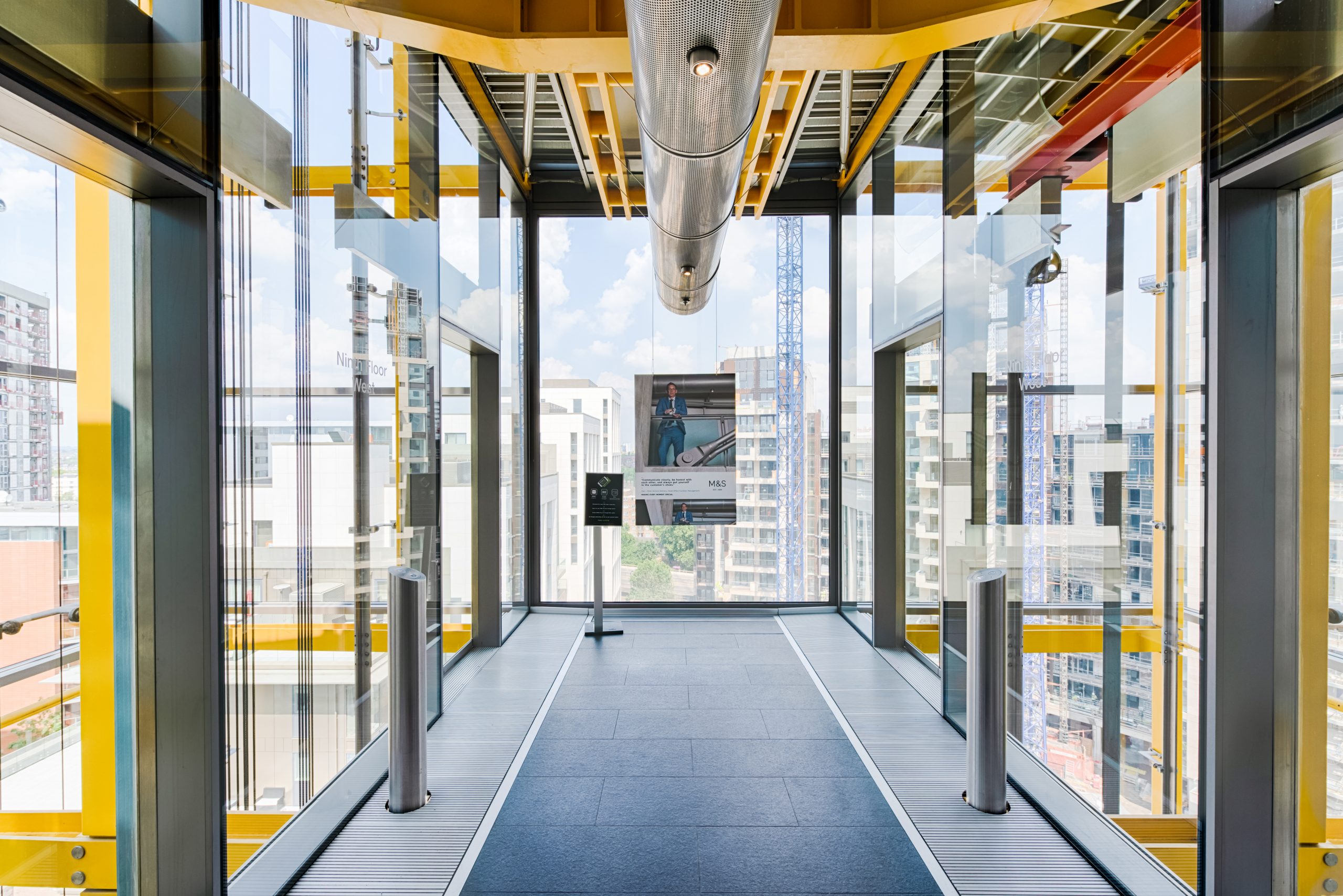
- At Marks & Spencer in Paddington, refurbishment was delivered in five phases with temporary swing space so staff could remain in occupation.
- For Capgemini, the brief involved consolidating London offices into one headquarters, with staggered handovers supporting phased occupation.
These examples demonstrate different responses to business needs. Neither establishes that staying or moving is inherently better; the appropriate route follows from the brief and building conditions.
Office relocation or refurbishment FAQs
Is staying usually the cheaper option?
It may avoid some relocation costs, but substantial building upgrades or complex phasing can change the comparison. Assess the complete project and occupation costs over the same period rather than assuming staying is less expensive.
How early should we start the assessment?
Begin while there is still time to investigate both routes and respond to relevant lease events. Surveys, negotiations, design and approvals can affect the options. Your property and project advisers can identify the decision dates that matter.
Should employees be involved?
Yes. Staff input helps identify operational needs and likely disruption. Combine consultation with attendance and space-use evidence, and explain which decisions are open for discussion.
Can a hybrid-working policy reduce the need to move?
Potentially, but only if the attendance model is realistic and supported by suitable settings. Average weekly attendance can conceal busy days. Test peak demand, team overlap and growth before reducing desk numbers.
What should the final recommendation contain?
A clear preferred option, the evidence supporting it, a total cost comparison, principal risks and the assumptions still to be resolved. Include the next decisions and the conditions under which the recommendation would change.
Make the stay-or-move decision with evidence
A useful decision process turns a broad property question into a clear assessment of people, space, cost and delivery.
Explore ODGroup’s workplace consultancy service to establish the requirements and test whether refurbishment or relocation is the better fit for your business.


