Four design decisions that work harder than they look.

By Kitti Kohalmi
Project Designer

When we designed our new home at 24 Chiswell Street, the brief was clear: create a workplace that supports how people feel, work and perform, while staying true to our sustainability commitments and design ethos.
Every decision had to earn its place. Not just look good but do good too.
Here are four design choices that quietly do a lot of heavy lifting, supporting the three key pillars we outlined when developing our new home: design, sustainability and wellbeing.
1. Paint that’s kinder to people and the planet.
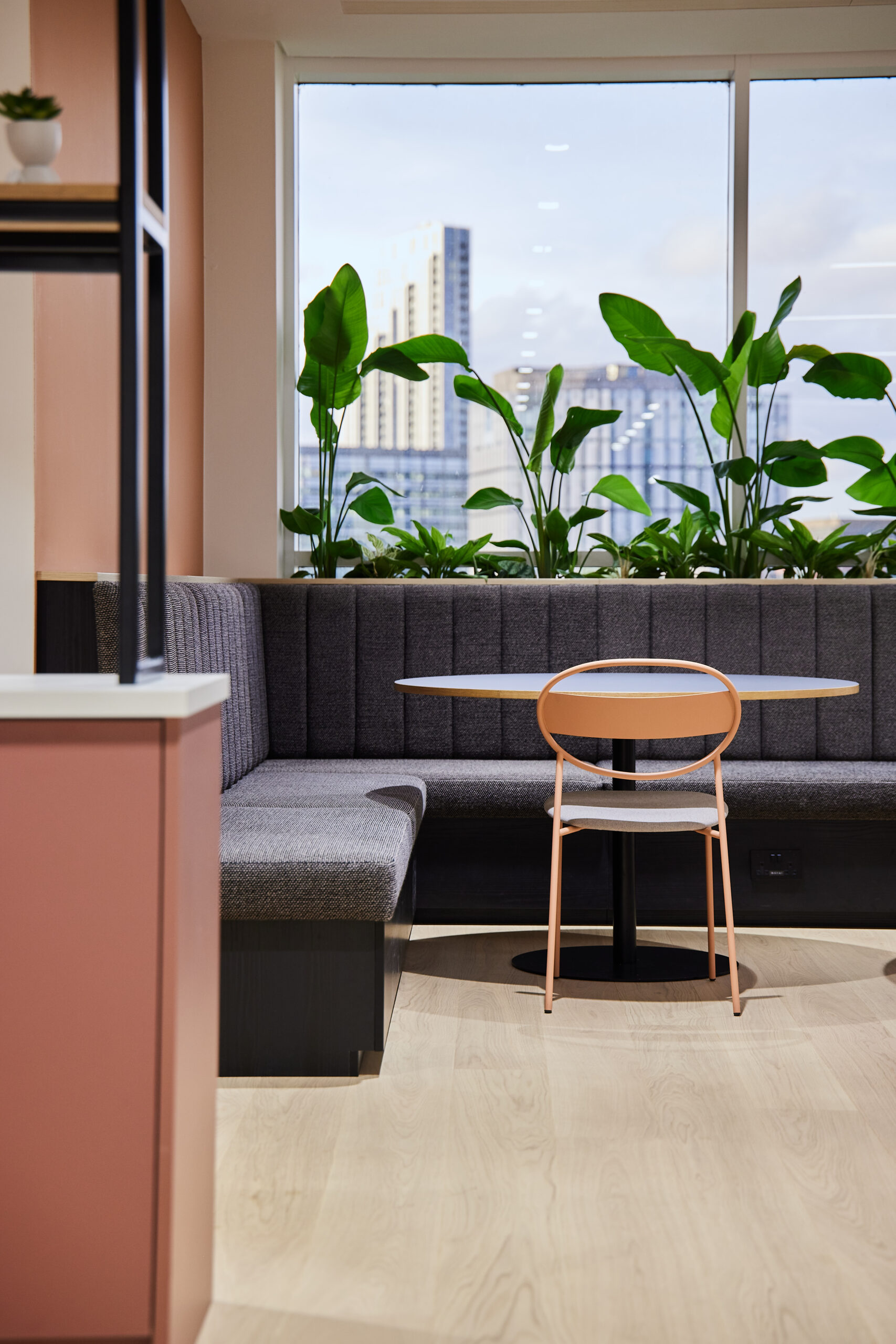 Paint might seem like a simple choice, but it affects both the health of a space and the people using it every day.
We chose COAT Paint in the shades Baked and Modest, not just for their warm, calming tones, but for what sits behind the colour:
- certified climate positive and net zero
- made to order to reduce waste
- recyclable packaging, no plastics
- low-toxin, solvent-free and water-based.
It’s a healthier paint choice, better for indoor air quality and employee wellbeing, while still delivering a soft, considered backdrop that supports focus and calm and living up to our sustainability standards.
2. Acoustic panels that quiet the room not the ideas.
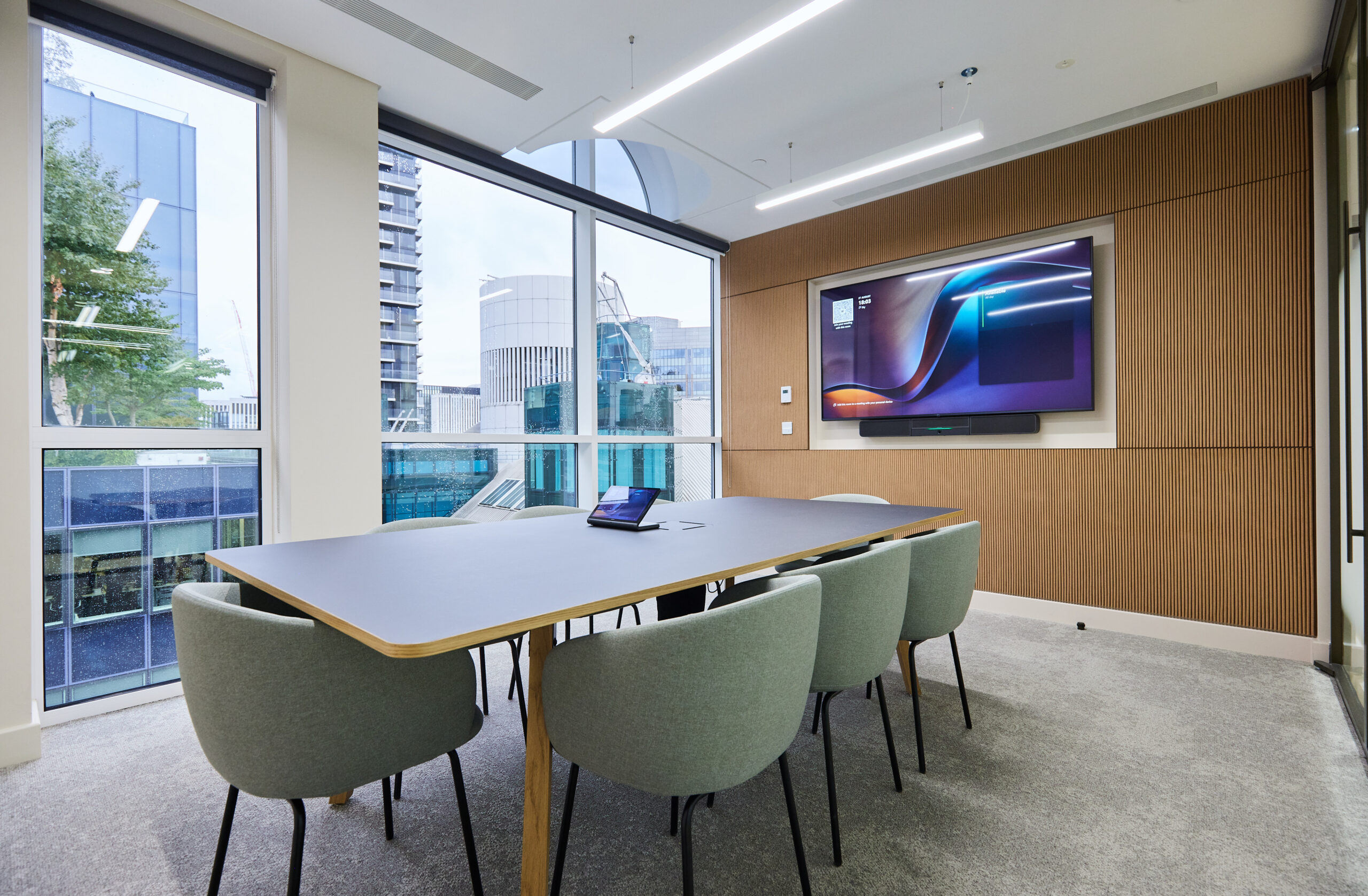
Designed to absorb and diffuse sound, creating clearer conversations and a lighter environmental footprint.
We specified Buxkin recycled leather acoustic wall panels, crafted from reprocessed offcuts from Italy’s shoe manufacturing industry. What would otherwise be waste is given a second life as a high-performing, tactile finish with excellent acoustic properties.
For us, it’s a win-win, we achieve:
- strong acoustic performance
- a sustainable, eco-conscious material choice
- a beautiful finish that elevates the space.
And importantly, it acts as a live demonstration product. By using it in our own office, we’re showing clients how sustainable materials can be both practical and design-led. The choice to use Buxkin is not a compromise, but an upgrade.
3. Defining social space through colour and texture
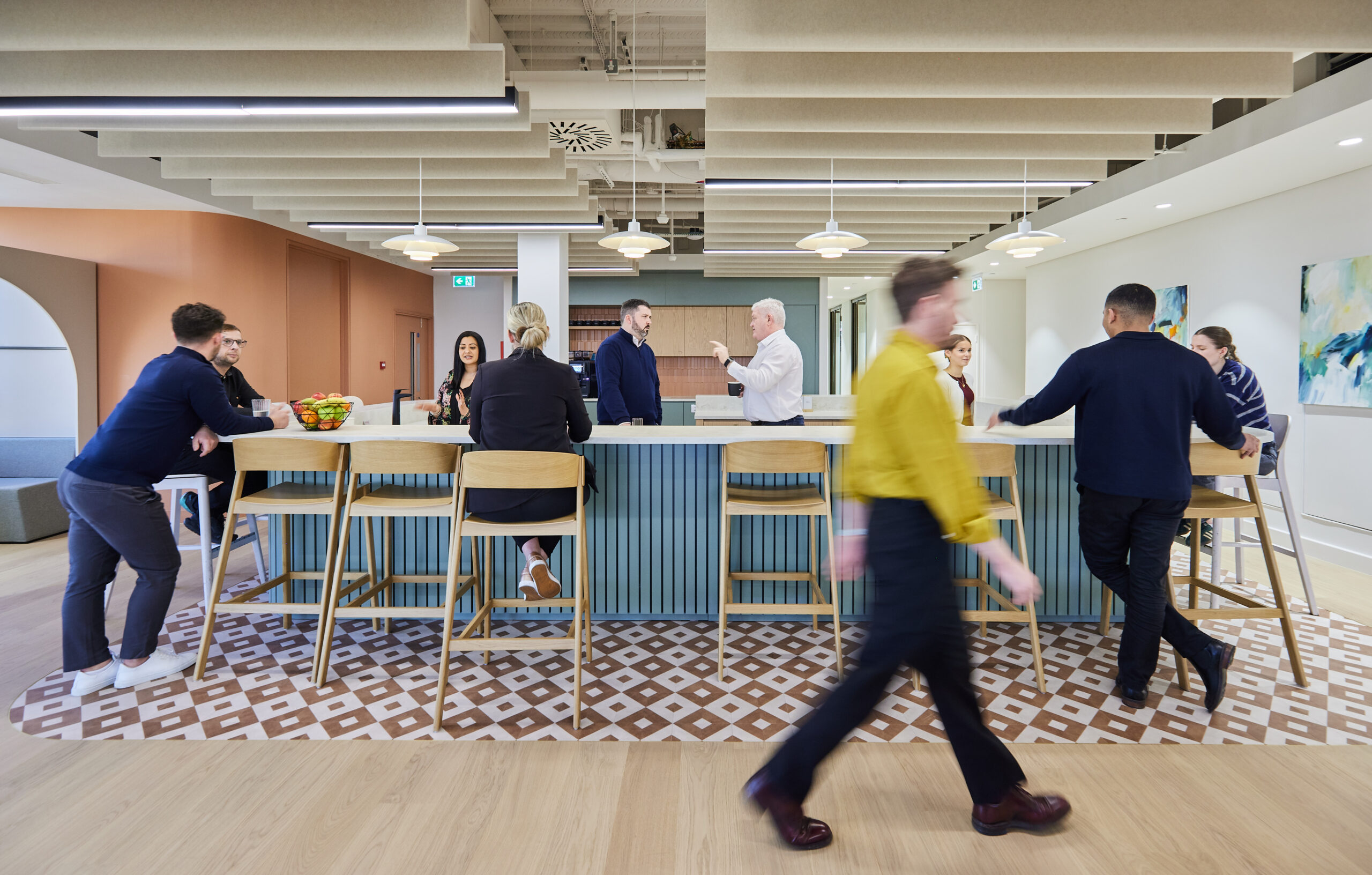
The breakout hub is the beating heart of the office, so we wanted it to feel distinct without shouting.
We introduced ceramic feature floor tiles around the bar and tea point, subtly defining the social zone and giving it its own identity within the wider floorplate.
The tiles sit comfortably within the neutral, earthy palette used throughout the office, generating calming, grounded and cohesive tones, but with just enough pattern and playfulness to signal a shift in mood.
It’s a small move with a big impact:
- it naturally draws people together
- encourages pause and interaction
- reinforces the hospitality-inspired feel of the space.
Design doesn’t always need bold gestures, sometimes it’s about gentle cues that guide how a space is used.
4. A carbon-negative floor that surprises everyone.
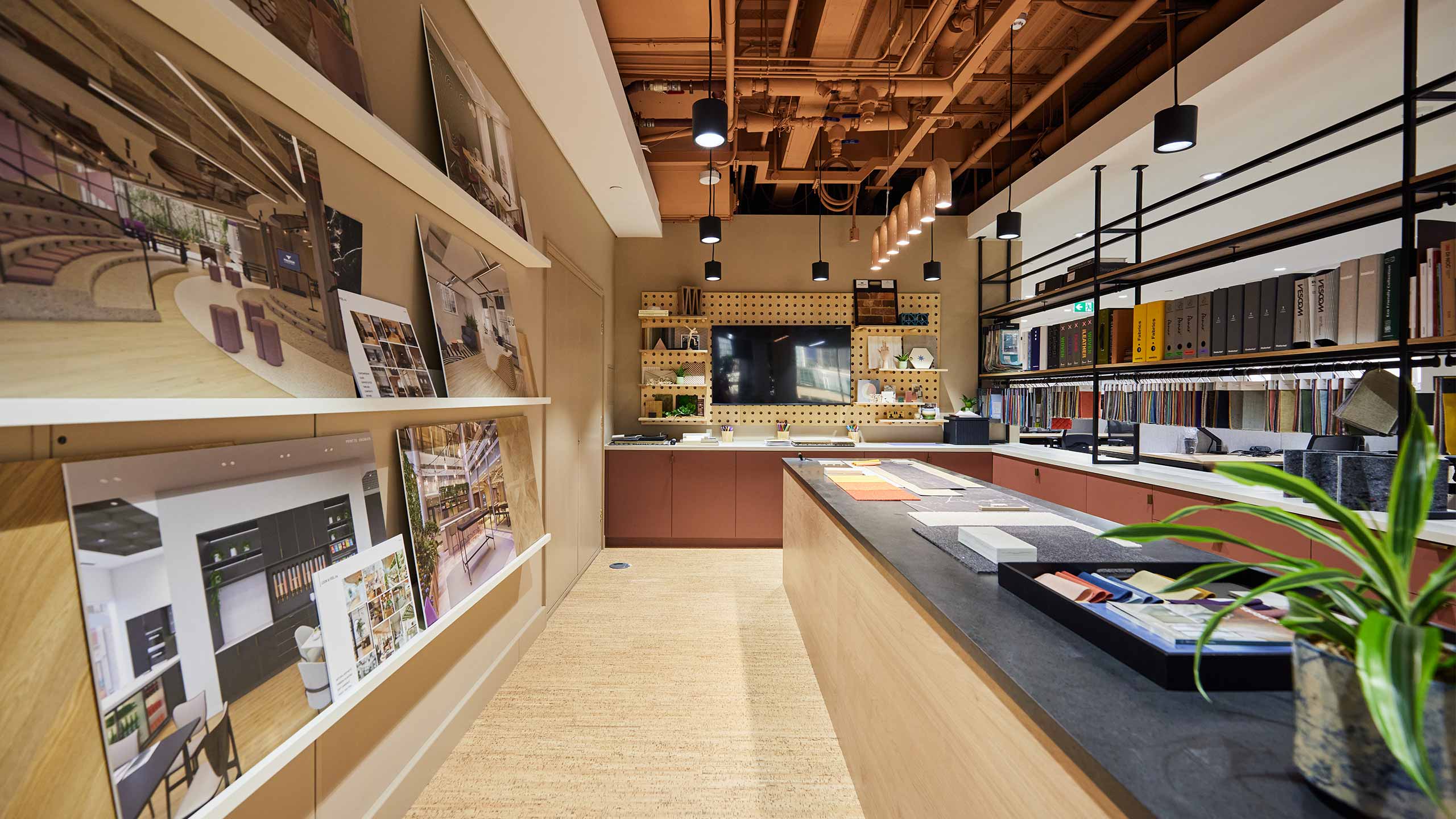
In our materials library, we wanted a floor that would spark conversation and Quadrant Corkform does exactly that.
Made predominantly from recycled bottle stoppers, Corkform is a carbon-negative alternative to timber, and it comes with some unexpected benefits:
- excellent thermal and acoustic insulation
- soft underfoot, improving comfort for everyday use
- surprisingly durable (this one always catches people out).
It’s warm, tactile and quietly resilient and it looks great too. As a natural material, cork brings an element of nature into the workplace, supporting wellbeing by reducing noise while creating a calmer, more comfortable environment, all while strongly aligning with our sustainability objectives
It’s also another showcase moment, a material people can walk on, experience, and rethink their assumptions about what “sustainable durability” really means.
Design with intention
None of these decisions were made in isolation. Together, they show how thoughtful design can support wellbeing, sustainability and performance without sacrificing creativity or character.
They also reflect something bigger: holding ourselves to the same standards we deliver for our clients.
Because the best workplaces don’t just look good. They feel good.
And they work hard, quietly, in the background, just like the people who use them.


