Brunel Engine Shed – Sustainability case study
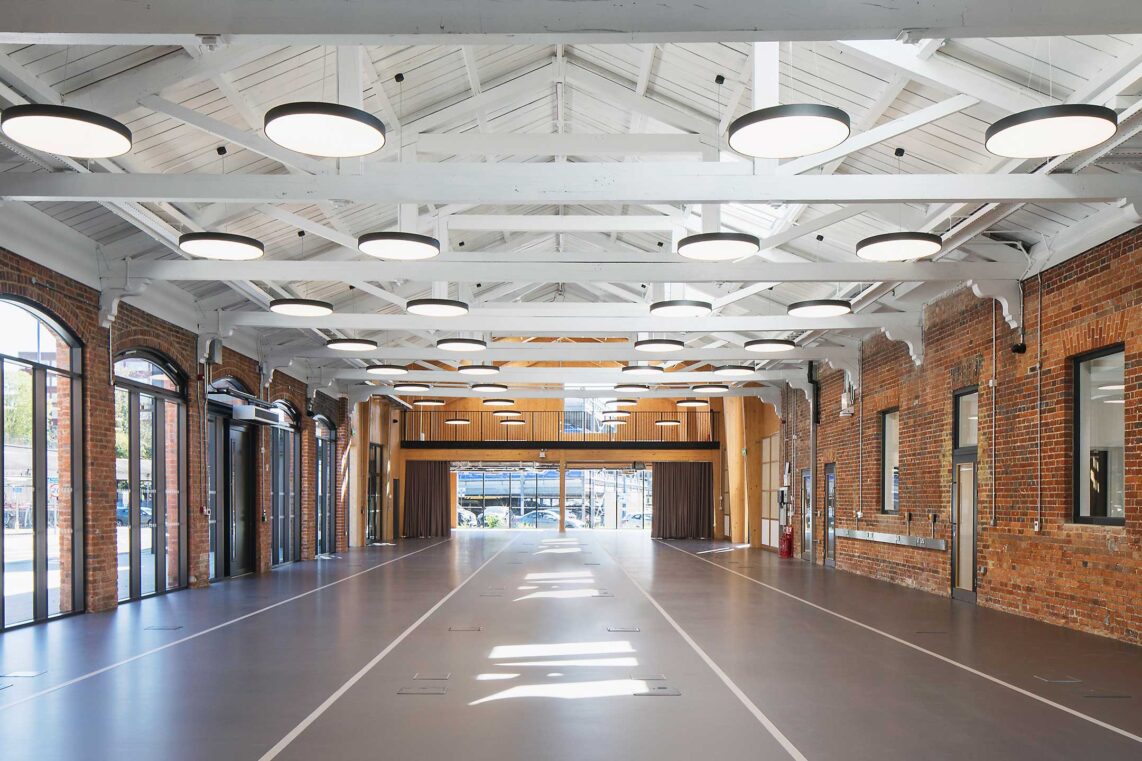
At ODGroup, we pride ourselves on delivering projects where quality and innovation go hand in hand, and our recent fit-out of the Brunel Engine Shed for Buckinghamshire New University is a standout example.
Originally designed in 1854 by the legendary Isambard Kingdom Brunel for the Great Western Railway, this Grade II listed building now stands as a revitalised and sustainable landmark next to High Wycombe Station.
Working with such a historic structure came with a unique challenge: honouring its architectural legacy while delivering the highest standards of sustainability. We’re proud to share that the project comfortably achieved SKA Gold, proving that with thoughtful planning and responsible construction, even heritage buildings can hit the top tier of environmental and social performance.

Achieving SKA Gold calls for a wide range of criteria to be met, here are just a few unique highlights:
- Low-carbon M&E systems: The mechanical and electrical design scored highly across SKA benchmarks, thanks to a combination of passive ventilation, solar PVs, and the retention of existing heat pump infrastructure.
- Gyvlon liquid flowing screed: A sustainable alternative to traditional cement-based screeds, Gyvlon uses synthetic anhydrite, a byproduct of the chemical industry, giving it 95% recycled content. Its self-levelling nature sped up installation and significantly reduced embodied carbon.
- Secondary materials: Circularity was a key priority, including the installation of 100% reclaimed raised access flooring.
- Biophilic design: Natural finishes and lighting were used throughout to create a calming, connection-to-nature aesthetic. Hemp fibre panels played a central role, these renewable, carbon-sequestering materials offer excellent insulation while complementing the historic fabric of the building.
- Smile Plastics: We used vibrant, terrazzo-style panels made from 100% post-consumer waste like yoghurt pots and packaging. Each sheet is unique and fully recyclable, adding both character and circularity to the design.
- Social value: Led by Mia Cherry, our social value programme was designed to ensure the project delivered lasting benefits beyond the building itself. In partnership with Buckinghamshire New University, we hosted student site visits and learning opportunities, while our work with local charity Chiltern Rangers supported community volunteering days and environmental initiatives. Separately, we collaborated with ProjectDIVERT to rehome existing furniture from the site, many pieces were donated to local charities, aligning with our commitment to circularity and supporting the wider community.
Great work achieved by our in-house sustainability team. Find out more about our team, ESG Strategy and accreditations here.


